A tree with a green tag marking it for emerald ash borer treatment

Emerald Ash Borer

Since finding Emerald Ash Borer (EAB) in February of 2023, the City of Moorhead Forestry team has implemented a management strategy that involves removal of small ash trees and treatment of approximately 5000 public ash trees. Removal of ash trees include all smaller caliper public trees, approximately 300 a year until 2027, and treatment of the 5000 public ash trees on a 3-year cycle. To see if a public tree will be removed or treated, we have created an interactive GIS map. 

Emerald Ash Borer Treatment Schedule Dashboard

Emerald Ash Borer (EAB) is a destructive, wood-boring insect that can silently damage ash trees for years before being detected, often taking 3 to 7 years for an infestation to become noticeable. Without intervention, up to 80% of ash trees can die within 7 to 12 years of infestation, dramatically impacting our urban forest and community landscape.

If you have questions or notice signs of EAB, the City’s Forestry Division is available to report concerns and be proactive in protecting Moorhead’s trees.

Contact Forestry

Ash trees make up 27% of Moorhead's urban forest. The Forestry Division has developed a plan for EAB Management of all city property and boulevard trees.

EAB Treatment

  • A 3-year treatment cycle is in place for established trees, treating approximately 1700 ash trees annually.
  • If a tree has an infestation, the tree will be removed. If EAB is present in the area, treatment will need to be continued until all untreated ash trees in the area have been killed or removed, up to 10-20 years.

Tree Removal

  • The City is in the process of proactively removing marginally-healthy and small ash trees.
  • Trees that are removed are replaced with a diverse mixture of tree species to create a robust and sustainable future urban forest.

Because EAB is so devastating to the ash tree population, it is important for homeowners to start planning for what they would like done with their private ash trees. First of all, homeowners should know how to identify ash trees. The Minnesota Department of Natural Resources has an excellent resource:

Ash Tree Identifier

Secondly, after the ash trees have been identified on the property, residents should assess their condition and size. If they are small or unhealthy, it may make more sense to remove them now and get a new tree planted sooner rather than later. 

If there are large, healthy trees on the property, a homeowner could look into the treatment options available. A trunk-injection of emamectin benzoate provides two years of excellent protection against all stages of EAB larvae and feeding adults.

For optimal tree health outcomes, most sources recommend treating a tree if there is an infestation within 15 miles of your property. Trees should only be treated if less than 30% of the canopy has thinned. Monitor the trees closely and learn the signs of an infestation to be able to treat the trees in time to keep them in optimal health.

If homeowners opt to do nothing until a tree is infested, Forestry will be scouting for infested trees on public and private property. If a private tree has EAB, the city will require that the tree be removed in order to stop the population growth of EAB. If homeowners cannot get it removed, the City will hire a contractor to remove the tree and the cost will be assessed to the property.

Dead ash trees become extremely brittle and hazardous to people and property, and they are more expensive to remove after death. It is financially-beneficial to get a plan in place to remove an ash tree before it has died if there is an infestation nearby.

The biggest way to help prevent EAB spread is to only buy firewood where you will burn it. EAB beetles only spread one mile per year naturally. Humans spread it much faster by accidentally moving EAB-infested firewood or other wood products.

If homeowners see signs of an infestation, report it in the following methods:

  1. Contact the City of Moorhead Public Works Department and request Forestry personnel to inspect the tree. To submit an inspection request, Contact Forestry or call Public Works at 218.299.5422 option 4.
  2. Contact Report a Pest or leave a detailed phone message at 1.888.545.6684.
  3. Send a report through the Great Lakes Early Detection Network App
  4. Login or create an EDDMaps Midwest account and submit a report.

Homeowner Guidance

Insecticide Treatment

Cold Tolerance

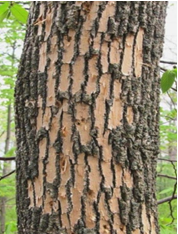
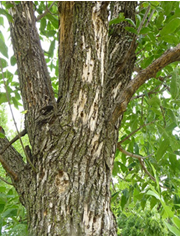
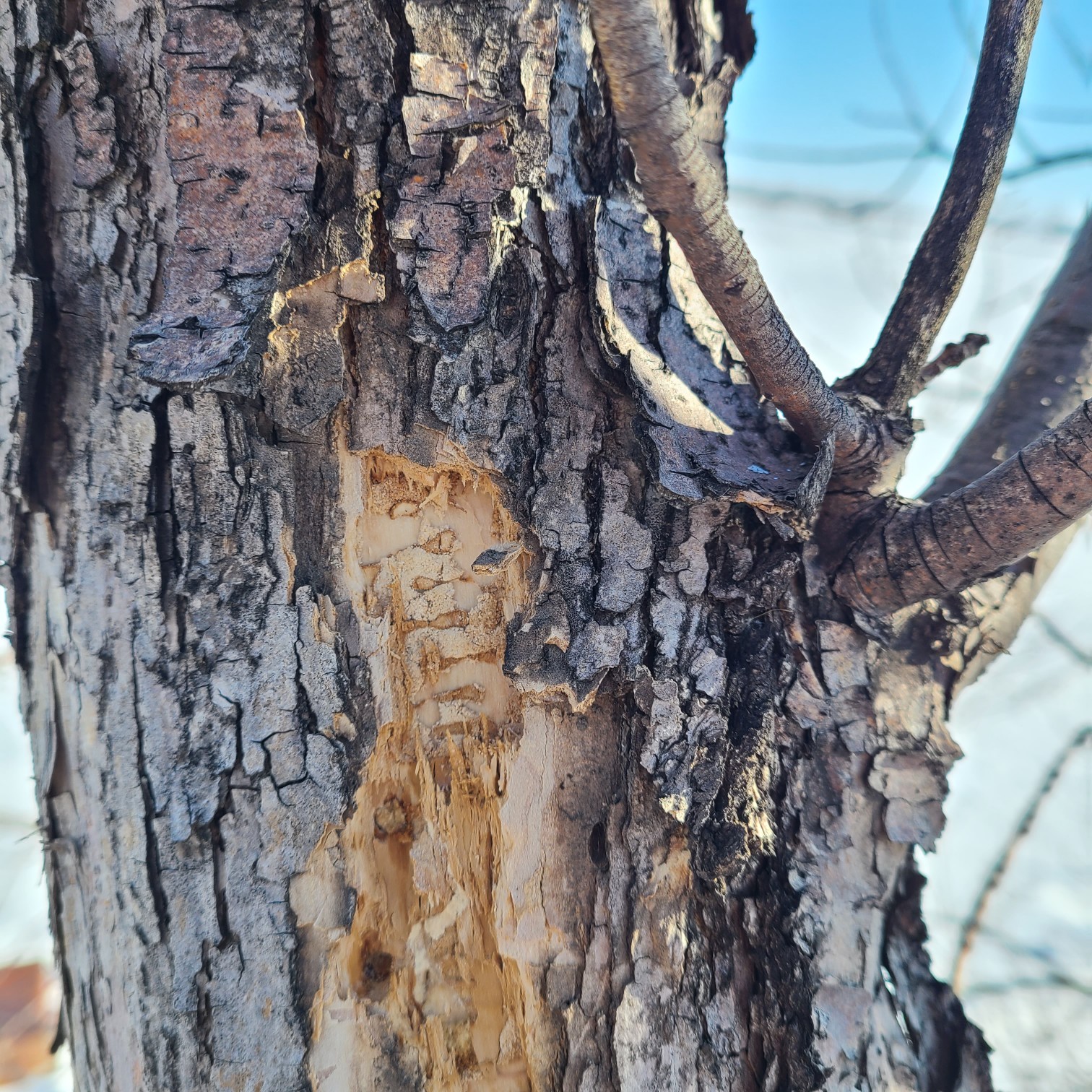
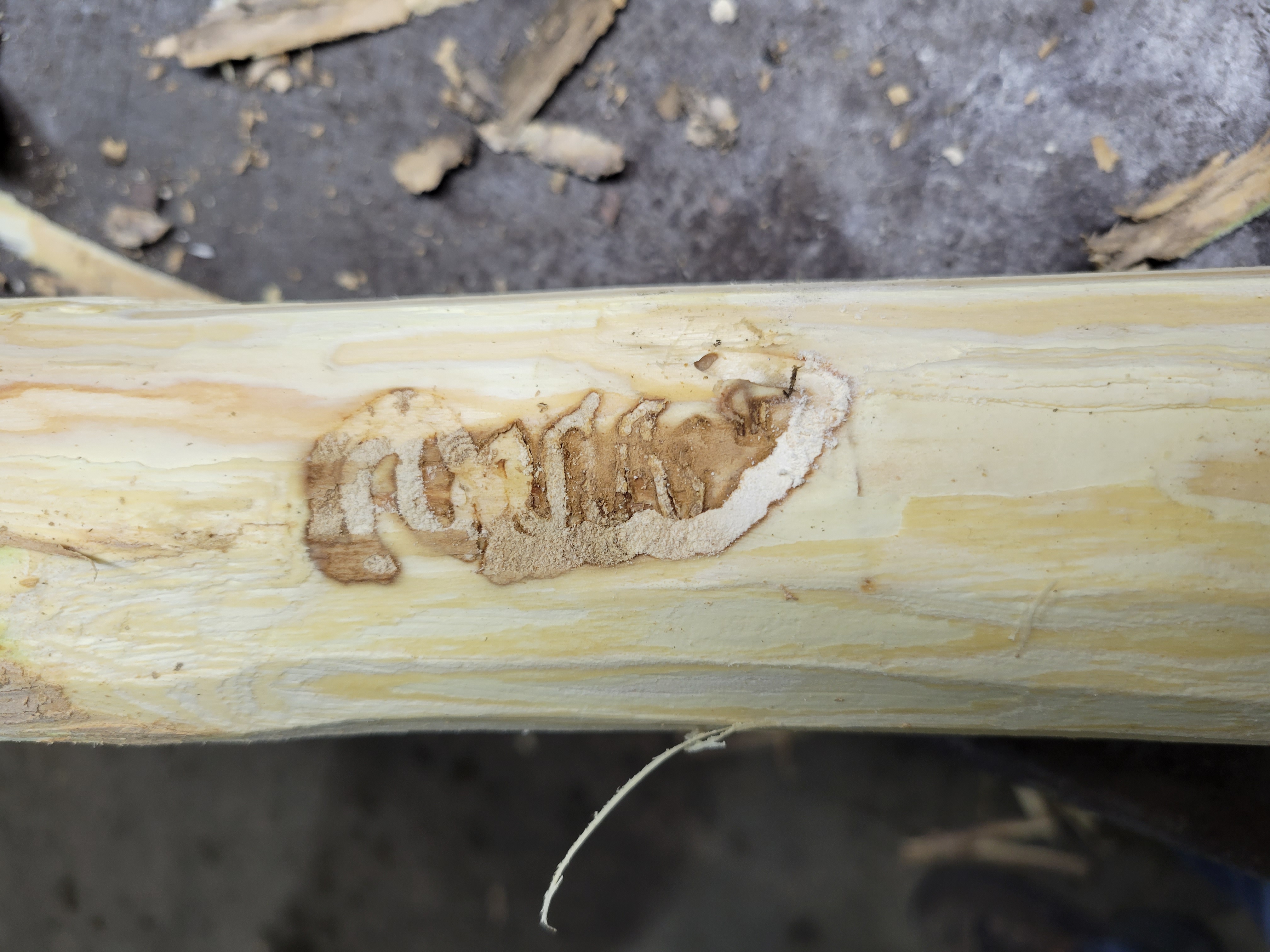
Signs and Symptoms of an EAB Infestation

We can all help detect and start controlling an EAB infestation early by learning the signs of an EAB-infested ash tree. Learn how to identify ash trees and monitor the trees in your yard and on the boulevard.

Ash Tree Identifier

An EAB infestation is very difficult to identify in the early stages. Some symptoms of EAB mimic symptoms of common ash health problems in the area, such as lack of water, nutrient deficiency, storm damage, etc.

However, if you notice extensive woodpecker damage to a tree, be on the lookout for bark splits and S-shaped galleries. Start looking for symptoms in the upper canopy with binoculars, since that is where an infestation will begin.

Contact the City of Moorhead Forestry Division if you have questions for concerns.

Contact Forestry