

Forestry prunes all young trees on a 3-4 year cycle for the first 12-15 years after they are planted. Once established in the landscape, young trees grow with great vigor and need to be managed through pruning. One of these needs is clearance pruning. Clearance pruning refers to pruning lower branches of a tree to raise the canopy, which allows for safe and efficient vehicle and pedestrian use along roadways and sidewalks.
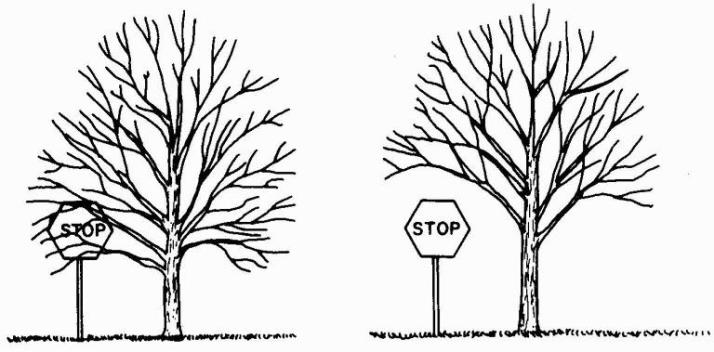
Structure pruning, or tree training, is another form of pruning that greatly benefits young trees. This type of pruning mitigates any current or future structural issues the tree may have or could develop. It is important to make these corrections when the tree is young. This ensures the tree can overcome any pruning cuts that are needed and helps it put energy into structurally-sound growth. If these issues are not addressed early, there may be increased risks of branch and tree failures as the tree matures, specifically during storms or wind events. Structural pruning takes place in the canopy of the tree and helps the tree obtain optimal growth habit, height, appearance. and mature structure.