Shade Trees

The trees listed below are recommended for boulevards without overhead power lines. These varieties should do well in what are often tough planting sites. The boulevard widths (the area from curb to sidewalk) can range from 6-15 feet wide, depending on the subdivision. With an up to an average of 8-foot width. Given this planting area, the goal is to have a selection of hardy tree species that are medium to large in height (35-65 feet) to produce shade, slow down storm water runoff, tolerate urban pollution, are relatively disease and insect free, and are aesthetically pleasing.

*Note, descriptions cited from certain nurseries are not an endorsement of that nursery. These are just citations to give credit for the information.* 

Recommended Boulevard Trees

for boulevards with no overhead power lines

  • Seems to be winter hardy and slow growing.
  • No serious insect or disease problems.
  • Only male trees will be planted.
  • Prefers alkaline soils, moderately tolerant of road salt.

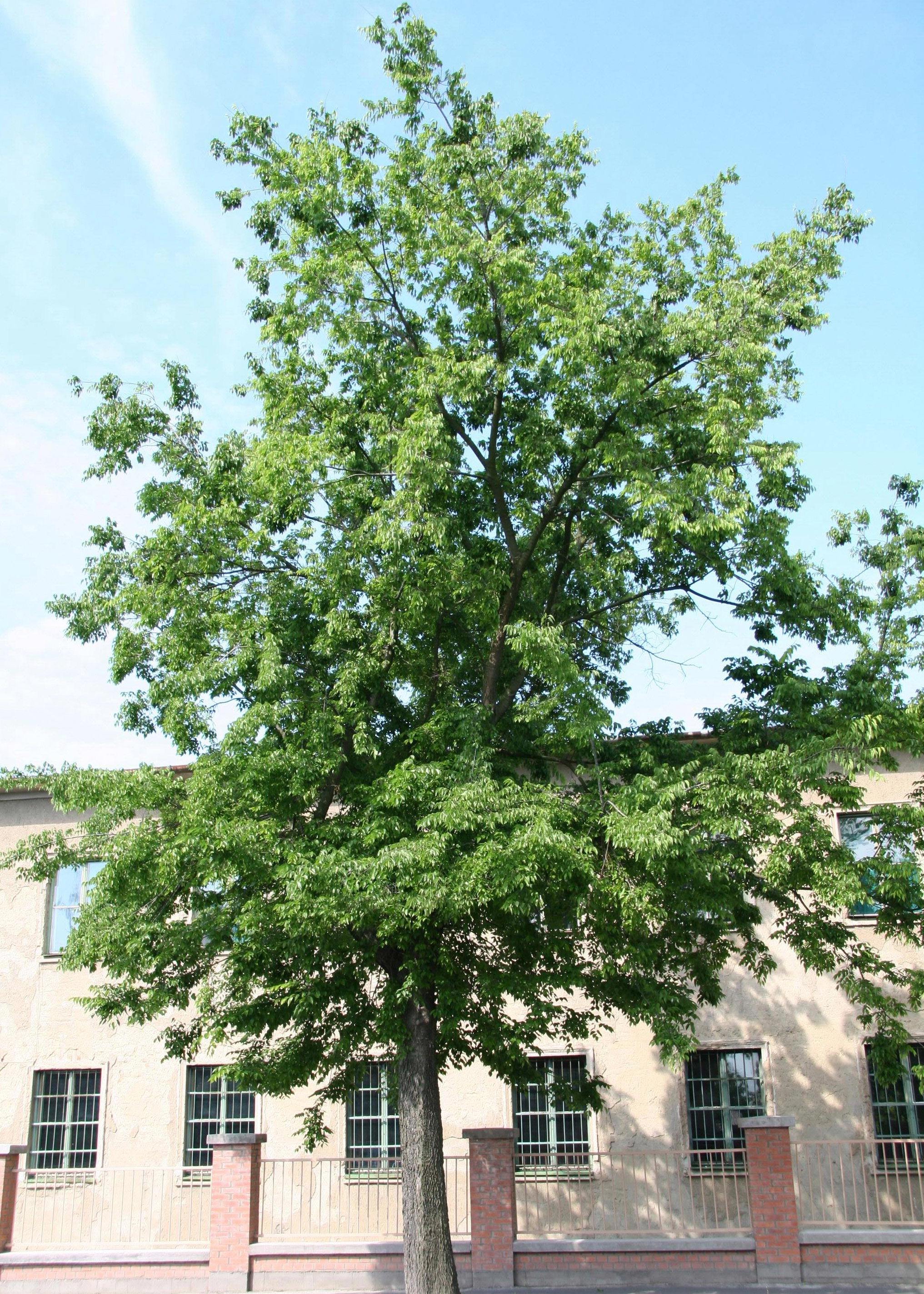
His Majesty Corktree
Phellodendron schalinense

  • University of MN introduction
  • Male Only
  • Height: 40'

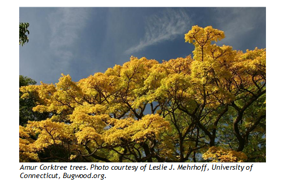
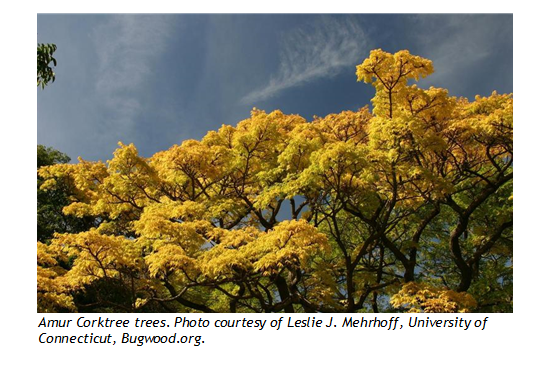
Amur Corktree
Phellodendron amurense

  • Height: 30-45'
    __

Description Sources: Morton Arboretum and UMN Agricultural Experiment Station.

  • Fast Growing
  • Can be a multi-stemmed tree or trained to be a single-stemmed tree
  • If birches are stressed, they can be susceptible to bronze birch borer and killed. (Bronze birch borer is a native borer and does not cause problems to otherwise healthy birch trees.)

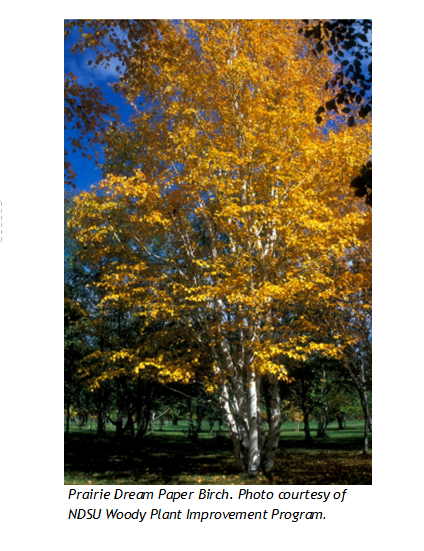
Prairie Dream Birch
Betula papyrifera 'Varen'

  • Excellent stress tolerance
  • Resistant to bronze birch borer
  • Height: 50'

Dakota Pinnacle Birch
Betula platyphulla 'Fargo'

  • Narrow column-like shape
  • Some resistance to bronze birch borer
  • Height: 35'

__

Description Sources: Missouri Botanical Garden and NDSU Woody Plant Improvement Program.

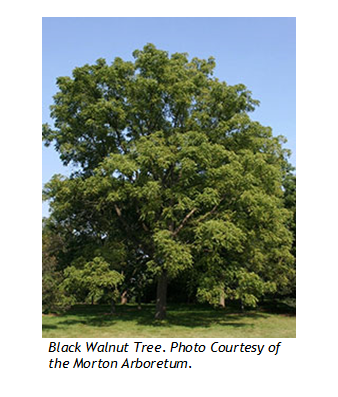
  • A large oval to rounded, somewhat open-crowned tree.
  • Used extensively by over 20 species of wildlife for food and cover.
  • Produces walnuts.
  • Needs to be sited carefully because it produces a chemical that is toxic to some plants.
  • Grows to be 50-70' tall.
  • Tolerates alkaline soil, clay soil, and road salt.
  • One of the best woods for furniture among native trees.
  • Native Americans reportedly used the husks of the nut to throw into ponds to poison fish and make them easier to catch. (Missouri Botanical Garden)
Black Walnut
Juglins nigra
  • Intolerant of shade
  • Difficult to transplant due to deep tap root
__

Description Source: Missouri Botanical Society.

  • Hardy tree for the area
  • Ohio Buckeye is prone to leaf scorch
  • Produces a nut that attracts wildlife
  • Produces many flowers in spring and nuts in fall that attract wildlife
  • Moderately tolerant of alkaline soils, soil salt, and salt spray


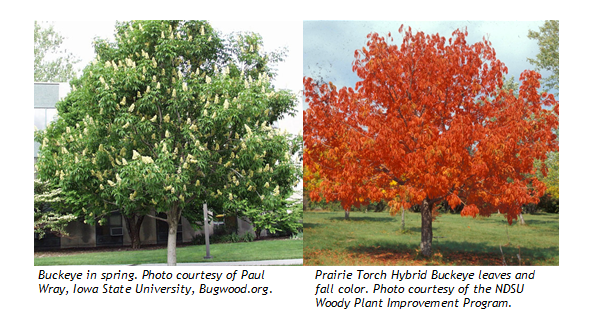
Autumn Splendor Buckeye
Aesculus x arnoldiana 'Autumn Torch'

  • UMN introduction
  • Semi-glossy
  • Emerald green foliage
  • Red-purple fall color

__

Description Source: NDSU Woody Plant Improvement Program, NDSU Ohio Buckeye Handbook, UMN Agriculture Experiment Station, and Morton Arboretum.

  • American Elm has been decimated by Dutch Elm Disease (DED) for decades.
  • All varieties are DED resistant.
  • Fast-growing and adaptable to tough sites.
  • Elms need frequent pruning in the first 15 years to help trees develop with good structure and strong branch attachments.
Discovery Elm
Ulmus davidiana var. japonica 'Discovery'
  • Highly resistant to Dutch elm disease
  • Height: 35-55'
Patriot Elm
Ulmus 'Patriot'
  • National Arboretum introduction
  • Vase shaped crown that can be more narrow than most elm cultivars
  • Excellent Dutch elm disease resistance
  • Height: 45'
  • Spread: 25'
Prairie Expedition Elm
Ulmus americana 'Lewis & Clark'
  • DED resistant NDSU introduction
  • Typical American elm form
  • Height: 55-60'
Triumph Elm
Ulmus 'Morton Glossy'
  • Morton Arbortum introduction with a sturdy, symmetrical growth habit
  • Good Dutch elm disease resistance
  • Height: 55'
  • Spread: 40'

__

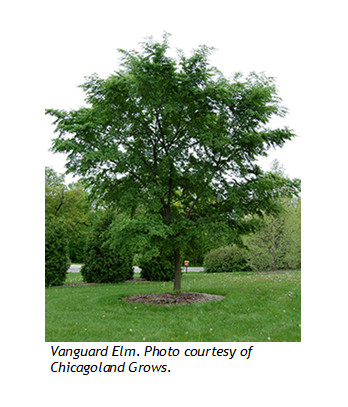
Description Sources: UMN Extension, Morton Arboretum, and Missouri Botanical Society. Photo: Chicagoland Grows.

  • This Species is being trialed for cold tolerance.
  • Reaches a height of 50-80 feet.
  • Tolerant of alkaline and acidic, compacted soils.
  • Tolerant of air pollution, heat, and salt.
  • Considered a living fossil, one of the longest-living tree species and has had fossils found from 270 million years ago.


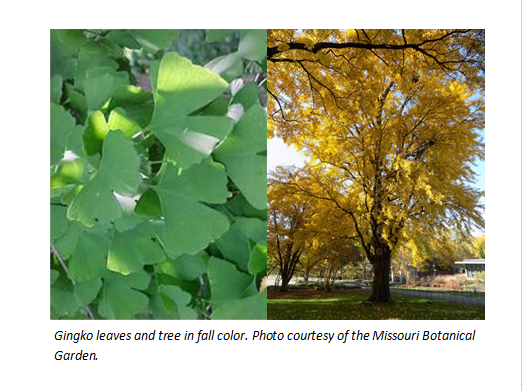
Gingko Biloba
Gingko biloba

  • Fan-shaped leaves

__

Description Source: Arbor Day Foundation and Missouri Botanical Garden.

  • Has been used to replace elms lost to DED.

  • Has very unique bark and edible berries that can persist through the winter.
  • "The name hackberry originated from the Scottish "hagberry" which in England was the common name for bird cherry. (Iowa State University)
  • Tolerant to salt spray, pollution, and adaptable to many site locations.
  • More prone to decay after wounding or with large prune cuts. These should be structured pruned young to minimize wounding.


Common Hackberry
Celtis occidentalis

  • Height 50-75'
  • Spread 50'

__

Description Source: Iowa State University.

  • Unique leaf structure gives dappled shade.
  • Very adaptable to drought and multiple soil conditions.
  • Medium sized tree that can be planted along boulevards or parking lots.
  • Tolerant of road salt.


Northern Acclaim Honeylocust
Gleditsia triacanthos var. inermis 'Harve'

  • Seedless and thorn-less NDSU introduction
  • Height: 40-50'

Skyline Honeylocust
Gledistsia triacanthos 'Skycole'

  • Mostly widely used honeylocust cultivar
  • Thornless and nearly seedless
  • Height: 45'
  • Spread: 35'

Street Keeper Honeylocust
Gledistsia triacanthos 'Draves' PP21698

  • Tight, narrow form creates a canopy half that of other cultivars
  • Thornless and largely seedless
  • Height: 45'
  • Spread: 20'

__

Description Sources: NDSU Woody Plant Improvement Program and Mortorn Arboretum.

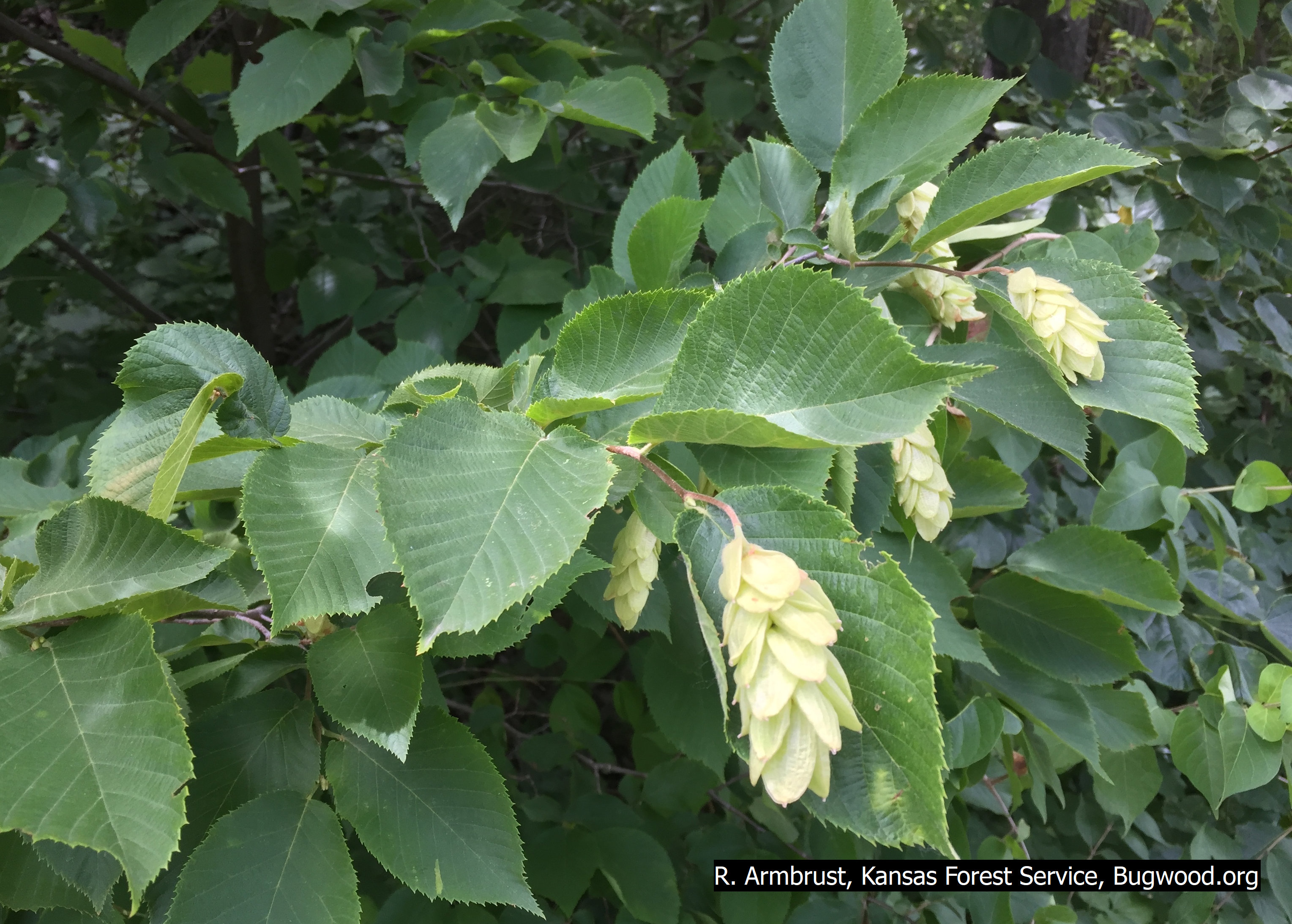
  • Smaller, native species.
  • Has hop-like fruits, hence the alternative name, hop hornbeam.
  • Resistant to many disease and insect problems.
  • 20-40' in height, slow growing.
  • Tolerates dry, alkaline, and clay soil.
  • Intolerant of salt.
  • Slow to establish.


Ironwood
Ostrya virginiana

  • Height 30'
  • Spread 25'

__

Description: Morton Arboretum.

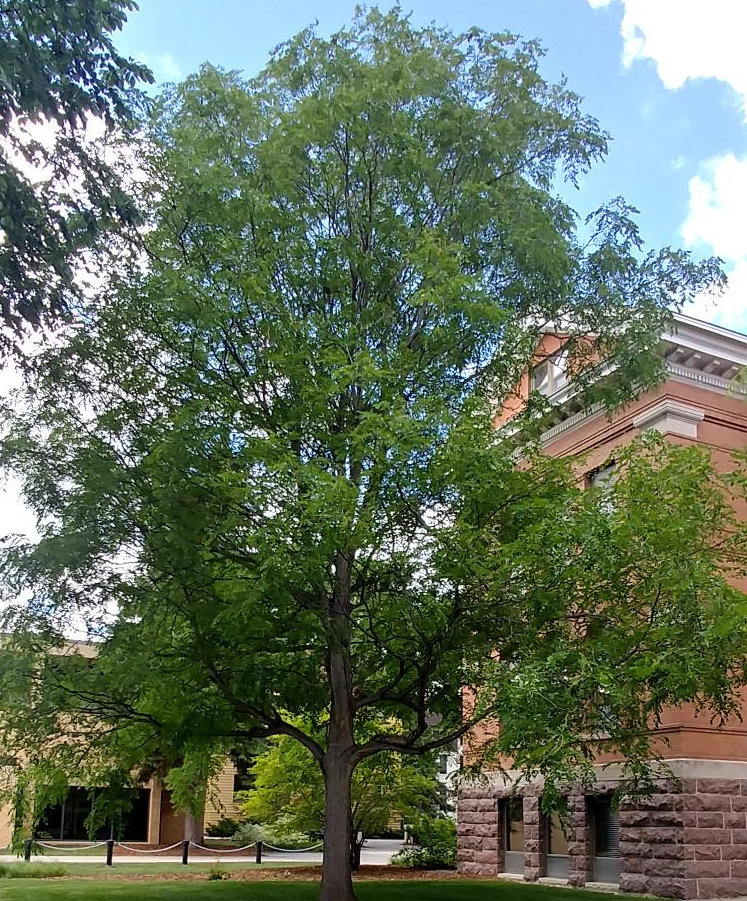
  • Drought resistant, tolerant of pollution, and adaptable to a variety of soils.
  • Slow to moderate growth rate.
  • Forms a uniform, picturesque crown at maturity.
  • Reaches height of 60-75'.
  • Native to the Midwest.
  • Large mammals that lived millions of years ago probably ate the pods and dispersed the seeds.

"Native Americans made coffee from roasted, ground seeds (raw seeds are toxic), and European settlers apparently learned from them." (Missouri Department of Conservation)


Kentucky Coffeetree
Gymnocladus dioicus

  • If a female tree is planted, pods will grow in fall
  • These are only used in parks

Stately Manor Kentucky Coffeetree
Gymnocladus dioicus 'Stately Manor"

  • 'Stately manor' University of MN introduction
  • Seedless selection

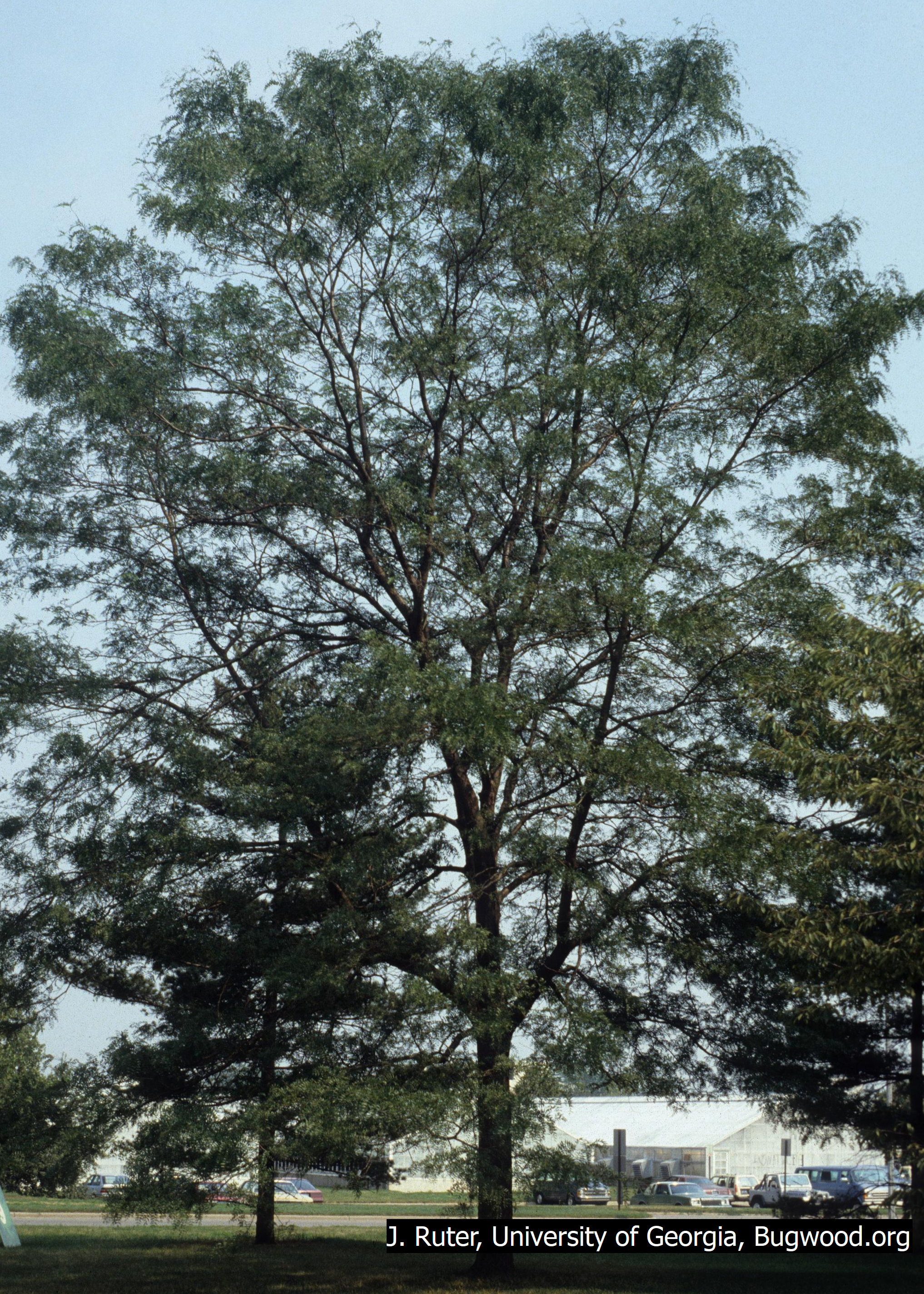
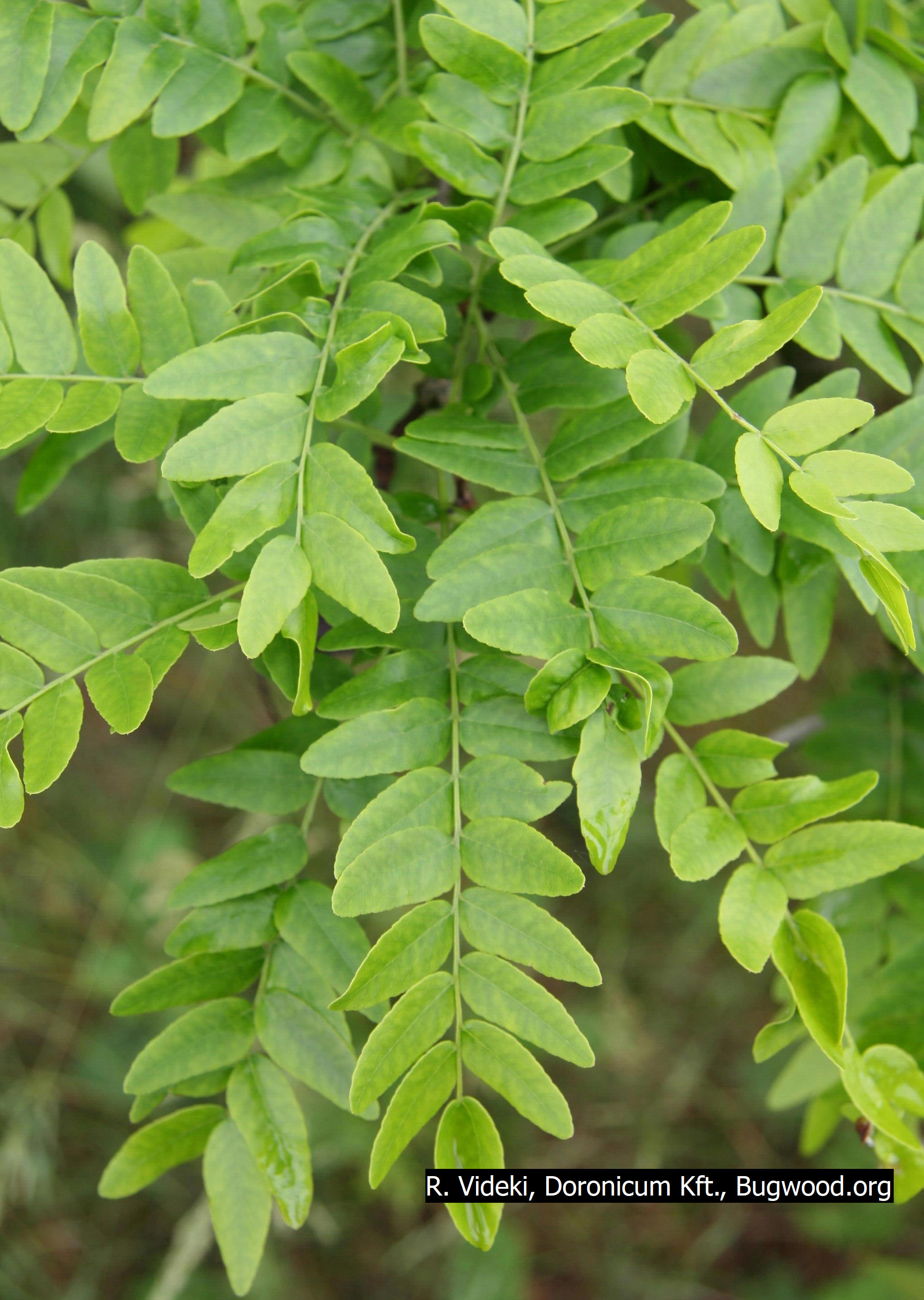
Espresso Kentucky Coffeetree
Gymnocladus dioicus 'Espresso'

  • Seedless selection
  • Arching branches provide a vase-like shape

__

Description Sources: Morten Arboretum and Missouri Department of Conservation.

  • A native tree species.
  • Tend to perform well without major disease or insect problems.
  • Drop fruit bracts in summer, can be messy.
  • Flowers are loved by bees.
  • Has a tendency to form poor branch unions without early structural pruning.


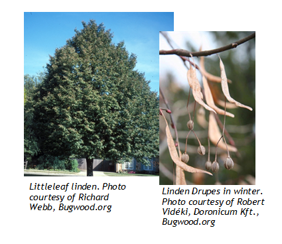
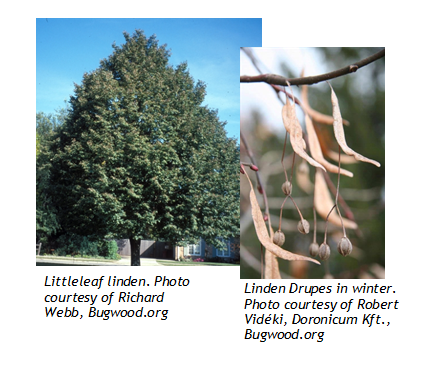
Boulevard Linden
Tilia americana 'Boulevard' 

Narrow pyramidal growth; height: 60'

Redmond Linden
Tilia americana 'Redmond' 

  • Upright growth pattern, and will not droop as much as other linden species
  • Height: 60-70'

Frontyard Linden
Tilia americana 'Bailyard' 

  • Symmetrical with dense foliage
  • Height: 60-75'

Greenspire Linden
Tilia cordata 'Greenspire'

  • Faster growth rate than other Lindens
  • Dense pyramidal to oval crown
  • Height: 40-60'

Harvest Gold Linden
Tilia mongolica 'Harvest Gold' 

  • Upright tree, hybrid of a little leaf linden and a Mongolian linden
  • Height: 25-45'

__

Description Sources: Gilman and Watson (1994), NDSU Agriculture and University Extension, NDSU North Dakota Tree Selector, University of Florida IFAS Extension, and Greenwood Nursery.

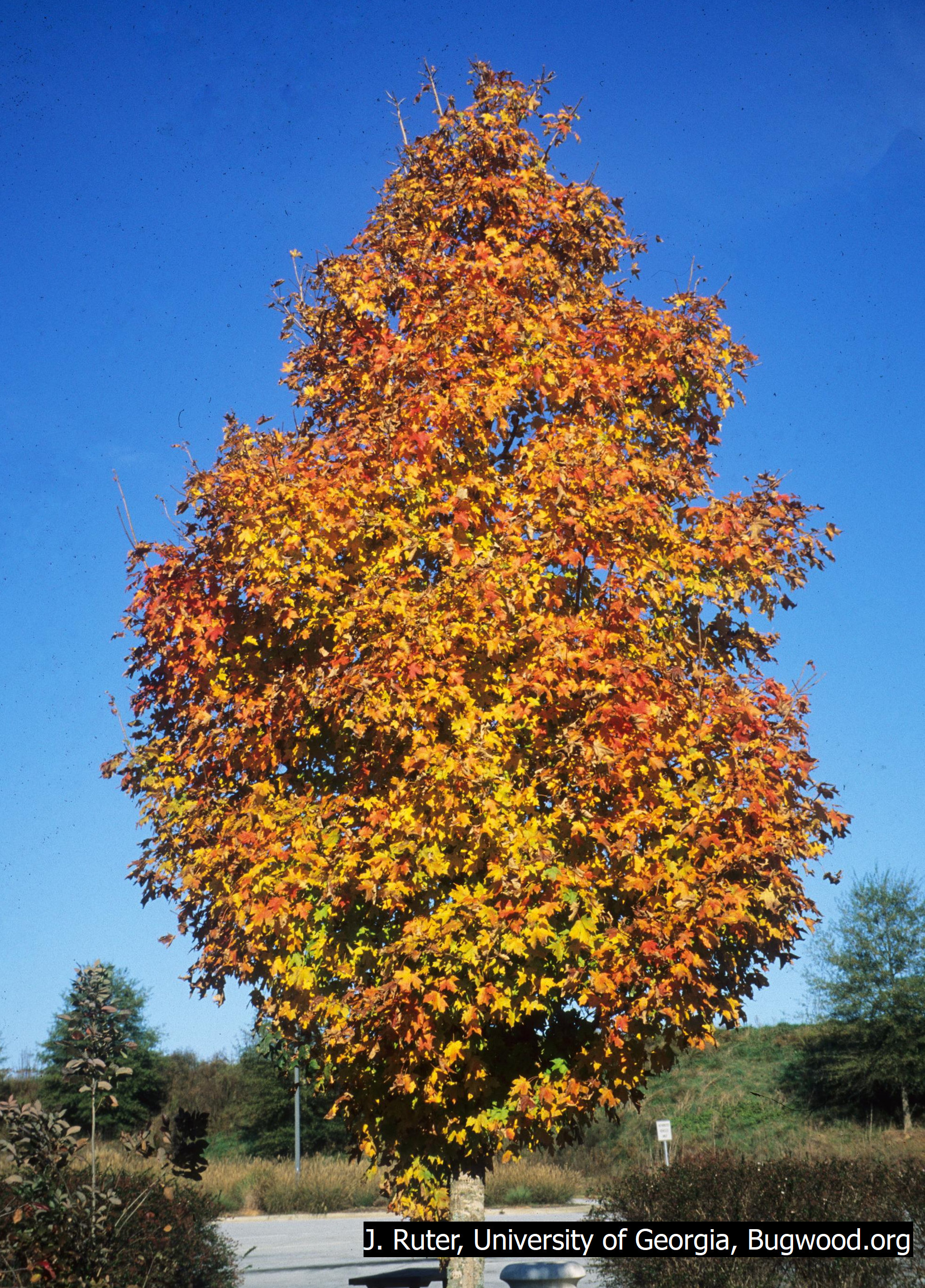
  • A popular tree that can struggle in alkaline soils.
  • Clay County has alkaline soils, and this makes it more difficult for plants to take up iron and manganese, which can lead to iron chlorosis in maples. (yellowing leaves)
  • Tend to be over planted, which can lead to problems during insect or disease outbreaks


Green Mountain Sugar Maple
Acer saccharum 'Green Mountain'

  • Adaptable to alkaline soils
  • Rapid growth, resistant to leaf scorch
  • Height: 50-60'

Rugged Ridge Maple
Acer miyabei 'JFS-KW3AMI

  • Cultivar of Miyabe Maple
  • Corky bark provides protection from sunscald and winter damage
  • Height: 55'
  • Spread: 40'

State Street Miyabe Maple
Acer miyabei 'Morton'

  • Excellent heat and drought tolerance, as well as tolerance of alkaline soils
  • Has distinct corky bark
  • Height 30-40'

__

Description Sources: MN Department of Agriculture, Morton Arboretum, and Missouri Botanical Society.

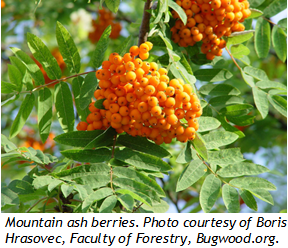
  • Mountain ashes are members of the rose family, so they are not true ashes and are not hosts to the 
    emerald ash borer.
  • Tend to be small to medium-sized trees.
  • Susceptible to problems with iron chlorosis and fire blight.
  • Fruit attracts birds.
  • Sensitive to road salt


Russian Mountain Ash
Sorbus aucuparia 'Rossica'

  • Needs well-drained soil
  • Resistant to fire blight
  • Highly tolerant of urban pollution

__

Description Source: Missouri Botanical Garden and Millcreek Nursery.

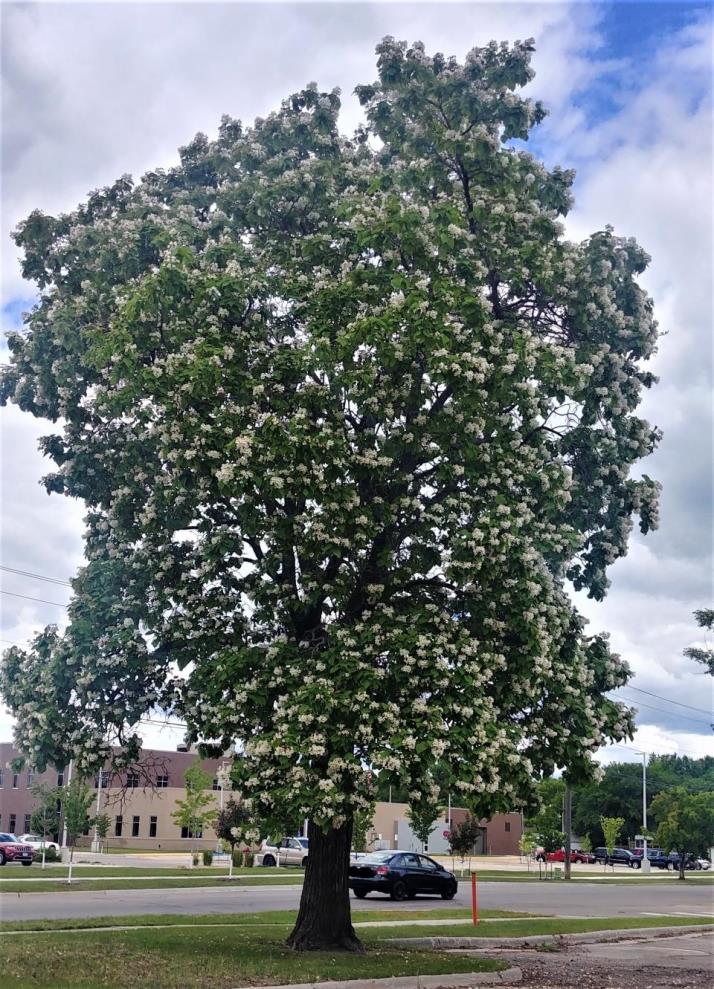
  • Midwest native.
  • Grows 40-60 feet tall.
  • Seed pods persist through the winter.
  • Tolerates alkaline and acidic soils, moderately tolerant to salt.
  • Weak branch structure.
  • Flowers attract pollinators.


Northern Catalpa
Catalpa speciosa

  • Pollution sensitive

__

Description Source: The Morton Arboretum.

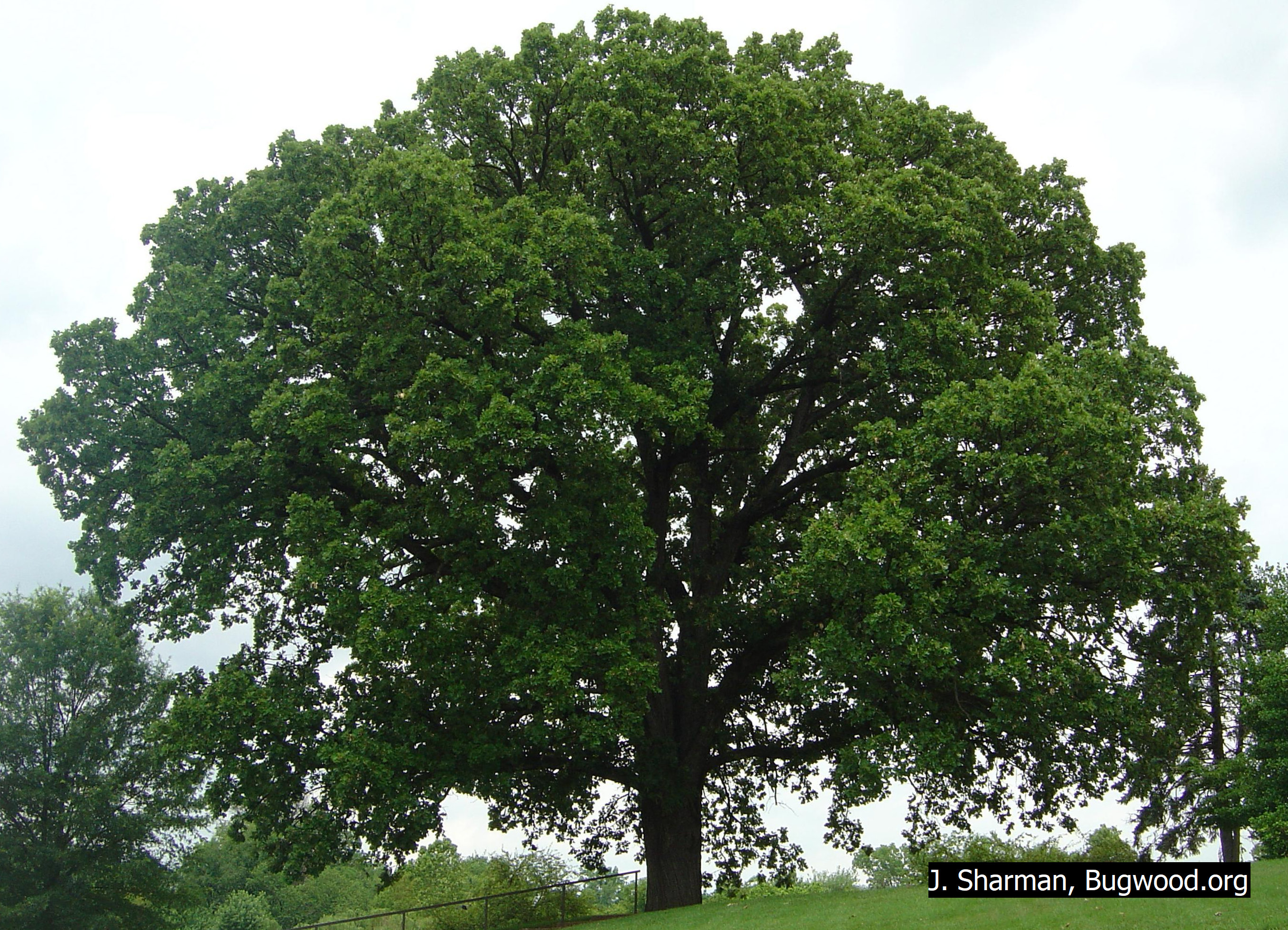
  • Native.
  • Produces acorns.
  • Excellent tree for wildlife food and cover.
  • Slow to moderate growth rate.
  • Majestic crown and interesting bark.


Bur Oak
Quarcus macrocarpa

  • Can tolerate occasionally flooded soil and drought conditions
  • Can handle alkalinity
  • May take 35 years to bear acorns
  • Height: 70-80'

Top Gun Bur Oak
Quercus macrocarpa 'Top Gun'

  • Narrow oak variety
  • Crown is half the width of a bur oak
  • Height: 50'

Heritage Oak
Quercus x macdaniellii 'Clemons'

  • Dark green
  • Tatter and mildew resistant foliage
  • Height: 60-80'

__

Description Source: Missouri Botanical Society, Morten Arboretum, Bylands, and McKay Nursery.

  • Somewhat drought tolerant and can handle standing water.
  • Medium to fast growth.
  • Shade tolerant and also does well in sunny areas.
  • Adaptable to many soil types.


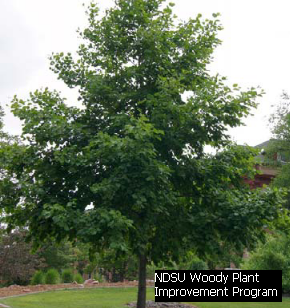
Prairie Horizon Alder
Alnus hirsuta cv. 'Harbin'

  • Purple catkins and cone-like fruit that persists through the winter
  • NDSU selection
  • Height: 25-45'

__

Description Sources: NDSU Woody Plant Improvement Program and iTrees.com.